

Published 06 Oct 2026
Strength Training for Runners: How to prepare for your next event
As race day approaches, most runners focus on increasing their volume. While running-specific training is essential, adding strength training to your routine can provide a valuable performance boost and decrease your risk of injury.
Research shows that regular strength training can improve running time-trial performance by an average of 2-5% across distances from 1km to 10km. Strength training has also been shown to improve running efficiency by 2-8%, helping runners use less energy at a given pace and maintain performance for longer, according to a systematic review published in Sports Medicine.
While current research examining strength training specifically for preventing running-related injuries is mixed, a systematic review and meta-analysis published in the British Journal of Sports Medicine found that strength training interventions reduced injury risk in other sports by up to 66%.
A separate review of 25 randomised controlled trials also found that strength training was one of the most effective exercise interventions for injury prevention across a range of sports
Beyond the potential benefits of reducing injury risk, stronger muscles and improved movement efficiency help runners better cope with the physical demands of training.
How often should runners do strength training?
A practical strength program should be completed 2-3 times per week and target the key muscle groups involved in running: the calves, quadriceps, hamstrings, glutes and core.
Aim to complete:
- 3 sets of each exercise
- 6-10 repetitions per set (or 15-30 seconds for plank variations)
- 1-3 minutes of rest between each set to allow each subsequent set to be performed at a similar level of difficulty to the first set.
Aim for an effort level of around 8 out of 10 on the Rating of Perceived Exertion (RPE) scale, meaning you finish each set feeling you could perform another one or two repetitions if needed.
Key exercises for runners
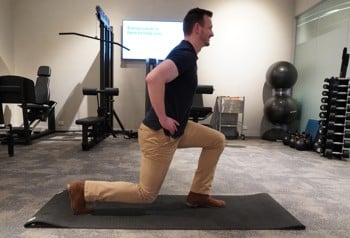
Quadriceps progression
- Squat
- Split Squat
- Rear Foot Elevated Split Squat
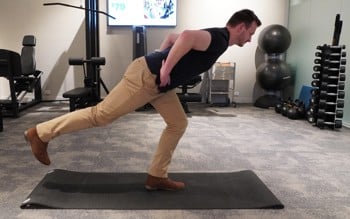
Hamstring progression
- Bodyweight Romanian Deadlift (RDL)
- Bodyweight Split Stance RDL
- Bodyweight Single Leg RDL
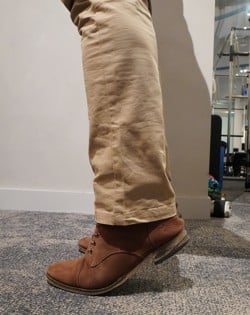
Calf progression
- Double Leg Calf Raise
- Single Leg Calf Raise
- Single Leg Calf Raise Off a Step
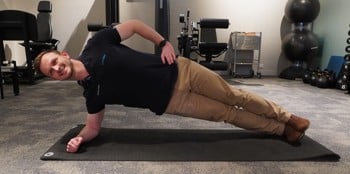
Glute and core progression
- Side Plank on Knees
- Side Plank
- Side Plank with One Leg Elevated
Start with the exercise variation that matches your current strength level and gradually progress as your control and capacity improve. If you're unsure where to begin, a physiotherapist can help tailor a program to your goals, experience and upcoming event.
Need to see a physio?
GMHBA Physiotherapy is available in four locations across Geelong, including at GMHBA Hub Belmont, GMHBA Hub Geelong, Lara Medical Centre and South Barwon Medical Centre.
Book an appointment today. And if you’re not a GMHBA member, no worries! We’re here for everyone and are currently taking new patients.
About the author
Jack Heggen graduated with a Master of Physiotherapy Practice and a Bachelor of Applied Science from La Trobe University in 2021, following a Bachelor of Exercise and Sport Science from Deakin University in 2013. Jack holds additional qualifications in dry needling, strength and conditioning, and Pilates.

